

How to Store Bulk Spice Rubs to Keep Them Fresh
Quick Summary
To store bulk spice rubs, keep them in airtight, food-safe containers away from heat, light and moisture. Repackage a large bag into a small daily-use jar and seal the rest, storing it in a cool, dark place. Rubs keep their best flavor for about one to two years.
- Choose airtight, food-safe containers with tight-sealing lids
- Use amber or dark glass to block light
- Repackage bulk bags so you open only one small jar at a time
- Keep rubs away from the stove, oven and dishwasher
- Let cold containers reach room temperature before opening to avoid condensation
Table of Contents
- Why Bulk Spice Rubs Lose Flavor Faster Than You Expect
- Choosing Airtight, Food-Safe Containers: Glass Versus Plastic
- Step-by-Step: Repackaging a Bulk Bag of Rub
- Protecting Rubs from Heat, Light and Moisture
- Can You Store Spice Rubs in the Refrigerator or Freezer?
- How Long Spice Rubs Last and How to Check Freshness
- Setting Up a Bulk-to-Daily-Use Storage System at Home
- Frequently Asked Questions
Why Bulk Spice Rubs Lose Flavor Faster Than You Expect
Last Updated: November 15, 2026
Buying spice rubs in bulk saves money, but only if the flavor lasts, so learning how to store bulk spice rubs matters as much as the price. Most bulk bags are opened, scooped and left on the counter for months, and that's where the flavor fades. Learning how to store bulk spice rubs properly keeps every batch tasting like the first one. If you're looking for custom blends at scale, see custom spice blend suppliers. (Source: U.S. Food and Drug Administration guidelines on food storage)
Ground spices lose their volatile oils quickly once they're cut and blended. Air, heat, light and moisture speed that loss up. A rub that sat on a sunny shelf for six months often tastes dull, even if the date on the bag still looks fine.
The blend itself matters too. Most rubs are built on salt and sugar, with a smaller share of aromatic spices. Salt and sugar hold up well, but the paprika, chili and pepper in the mix do not. So the hardest part of the job is protecting those delicate flavor drivers.
Storage after your rub reaches your kitchen is up to you. The steps below show how to protect it.
Choosing Airtight, Food-Safe Containers: Glass Versus Plastic
The best container is one that seals tightly, blocks light and is made from food-safe material.
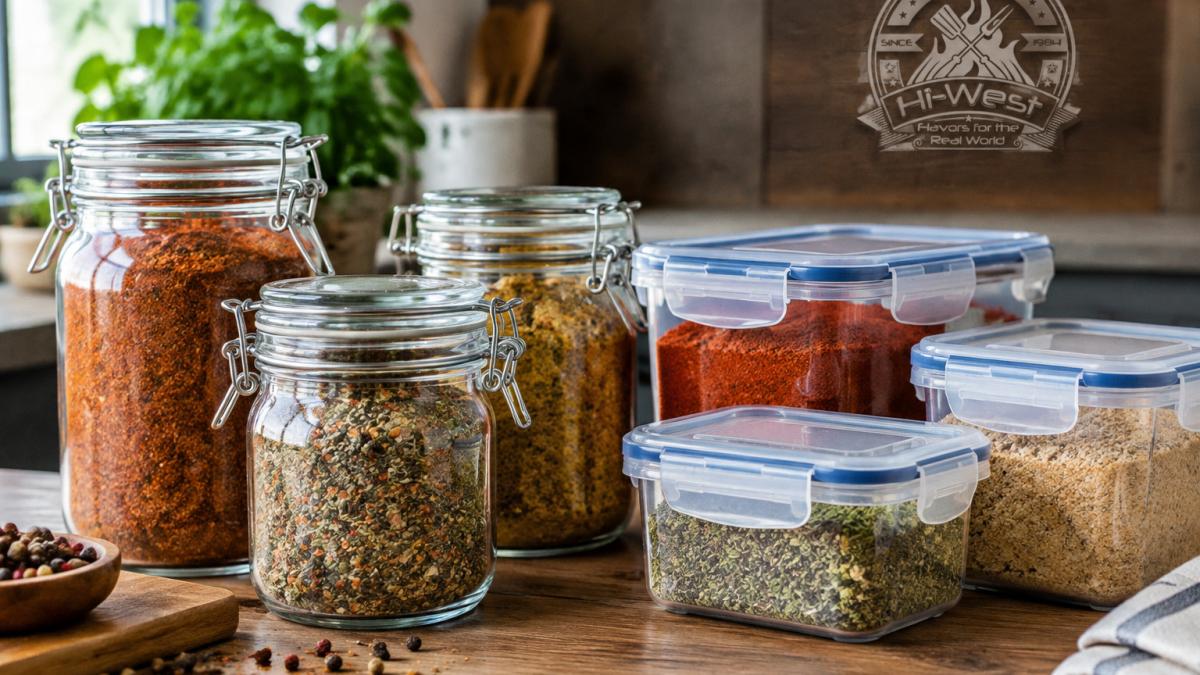
Glass jars are the top choice for a working jar you open daily. They don't absorb odors, they don't react with the spices, and they're easy to clean. Choose wide-mouth jars with a tight screw lid or a rubber gasket.
Food-grade plastic containers are lighter and less likely to break, which makes them a practical choice for a large backup supply. Look for a tight-sealing lid and a label that says the plastic is food safe.
Barrier pouches and vacuum-sealed bags are the best option for reserve portions you won't open for months. A foil-lined or metallized barrier pouch blocks light and limits oxygen transfer better than a thin zip-top bag, and a vacuum-sealed bag removes most of the air before sealing.
Zip-top bags work for short-term storage but let in more air over time. If you use them, press out the air and store the bag inside a sealed jar.
Compare the options by what matters for a blended rub:
-
Quantity: a pint jar for a working portion, a food-grade bucket or barrier pouch for the reserve.
-
Seal quality: a gasketed screw lid or a vacuum seal beats a press-on lid or a folded bag.
-
Light protection: amber glass, a foil-lined pouch or a dark cabinet all block light; clear plastic does not.
-
Ease of use: a wide-mouth jar is easy to scoop from; a bucket is easy to fill but awkward to scoop from daily.
-
Choose airtight lids that seal fully
-
Pick dark glass to block light
-
Use one container per blend to avoid mixing flavors
-
Skip thin bags for anything you plan to keep for months
Watch out: a container that is food safe is not automatically airtight, and a lid that feels tight can still let air in once the gasket dries or cracks.
Here is how the main container options compare for storing a blended rub.
| Container | Best for | Key difference |
|---|---|---|
| Glass jar | Daily-use working jar | Doesn't absorb odors; amber glass blocks light |
| Food-grade plastic | Large backup supply | Lighter and less likely to break |
| Barrier pouch or vacuum bag | Reserve portions unopened for months | Blocks light and limits oxygen best |
| Zip-top bag | Short-term storage only | Lets in more air over time |
Step-by-Step: Repackaging a Bulk Bag of Rub
Repackaging is the fastest way to protect a big bag. Split it into smaller containers so you open only one at a time.
- Clear a dry workspace. Wipe the counter and make sure your hands and tools are completely dry. Moisture is the enemy of dry rubs.
- Wash and dry your jars. Run them through the dishwasher or wash them by hand, then let them air dry fully before filling.
- Scoop out a daily-use portion. Fill one small jar, about enough for a few weeks of cooking. Use a dry spoon and leave the rest sealed.
- Seal the bulk bag tightly. Press out the air, fold the top over and clip it or tape it shut. Store it in a cool, dark place.
- Label every jar. Write the blend name and the date you filled it.
- Store the daily jar away from the stove. Keep it in a cabinet, not beside the oven or dishwasher.
Protecting Rubs from Heat, Light and Moisture
Three conditions do most of the damage: heat, light and moisture. Control all three and your rubs will last much longer. A blended rub needs a little more thought than a single spice, because salt, sugar, dried herbs and ground spices each respond differently to those conditions. (Source: Safe Food Handling practices)
Heat speeds up the loss of oils. Keep jars away from the stove, the oven and sunny windows. A cabinet away from appliances works better than a spice rack over the range.
Light breaks down color and flavor. Dark glass or a dark cabinet helps protect the blend. Fading color in a paprika- or chili-based rub is often the first visible sign that light and age are working on it.
Moisture causes clumping and can invite mold. Salt and sugar are the moisture magnets in a rub: sugar turns sticky and salt cakes when humidity rises, and either one can turn a free-flowing blend into hard lumps. Dried herbs and ground spices can clump too, but the salt and sugar usually show it first.
Condensation is a hidden risk. If you move a cold container into a warm room, moisture can form inside. Let it come to room temperature before opening.
A few habits keep a blend in good shape:
- Keep the working jar in a cabinet away from the stove, oven and dishwasher.
- Store the reserve in a dark, dry spot rather than on an open shelf.
- Scoop with a dry spoon and never dip a wet or greasy utensil into the jar.
- Wipe the rim and lid dry before closing so moisture does not get trapped.
Watch out: a rub that smells damp, shows mold, or has hard clumps that will not break apart should be discarded rather than scooped around.
Can You Store Spice Rubs in the Refrigerator or Freezer?
Yes, you can store spice rubs in the refrigerator or freezer, but only in airtight containers. Cold storage slows the loss of oils, which helps with large quantities you won't use for a long time.
The catch is condensation. Every time you take a cold jar out, warm air rushes in and moisture forms. Repeated cycles can cause clumping. For that reason, keep only the backup supply in the freezer and move a small working jar to the pantry.
A simple method works well: seal the rub in a freezer-safe bag, press out the air, and place it inside a rigid container. Before you open it, let the container warm up fully so no moisture forms on the spices.
- Use the freezer for backup quantities you won't open for months
- Keep a small pantry jar for daily cooking
- Let sealed containers reach room temperature before opening
How Long Spice Rubs Last and How to Check Freshness
Most dry rubs keep their best flavor for about one to two years when stored properly. After that, they're still safe to use in many cases, but the flavor fades. Shelf life depends on the ingredients, the storage conditions and how often the container is opened.
Use your senses to check freshness:
- Smell: Open the jar and sniff. A fresh rub smells bold and rich. A dull or musty smell means it's losing strength.
- Color: Bright, even color is a good sign. Dark patches or fading can signal age or moisture.
- Texture: Loose, free-flowing powder is ideal. Hard clumps usually mean moisture got in.
- Taste: Rub a pinch between your fingers and taste a small amount. If it tastes flat, mix in a bit more fresh blend or use more of it.
If you see mold, a sour smell or insects, throw the rub away. Those signs mean it's time to start a new jar.
Setting Up a Bulk-to-Daily-Use Storage System at Home
A simple system keeps bulk rubs fresh without much effort. The goal is to keep most of the supply sealed and only open a small amount at a time.
Start with a backup stash. Keep the sealed bulk bag or a large airtight jar in a cool, dark cabinet, or in the freezer if you want extra protection. Next, keep a single working jar for daily cooking, refilled from the backup every few weeks.
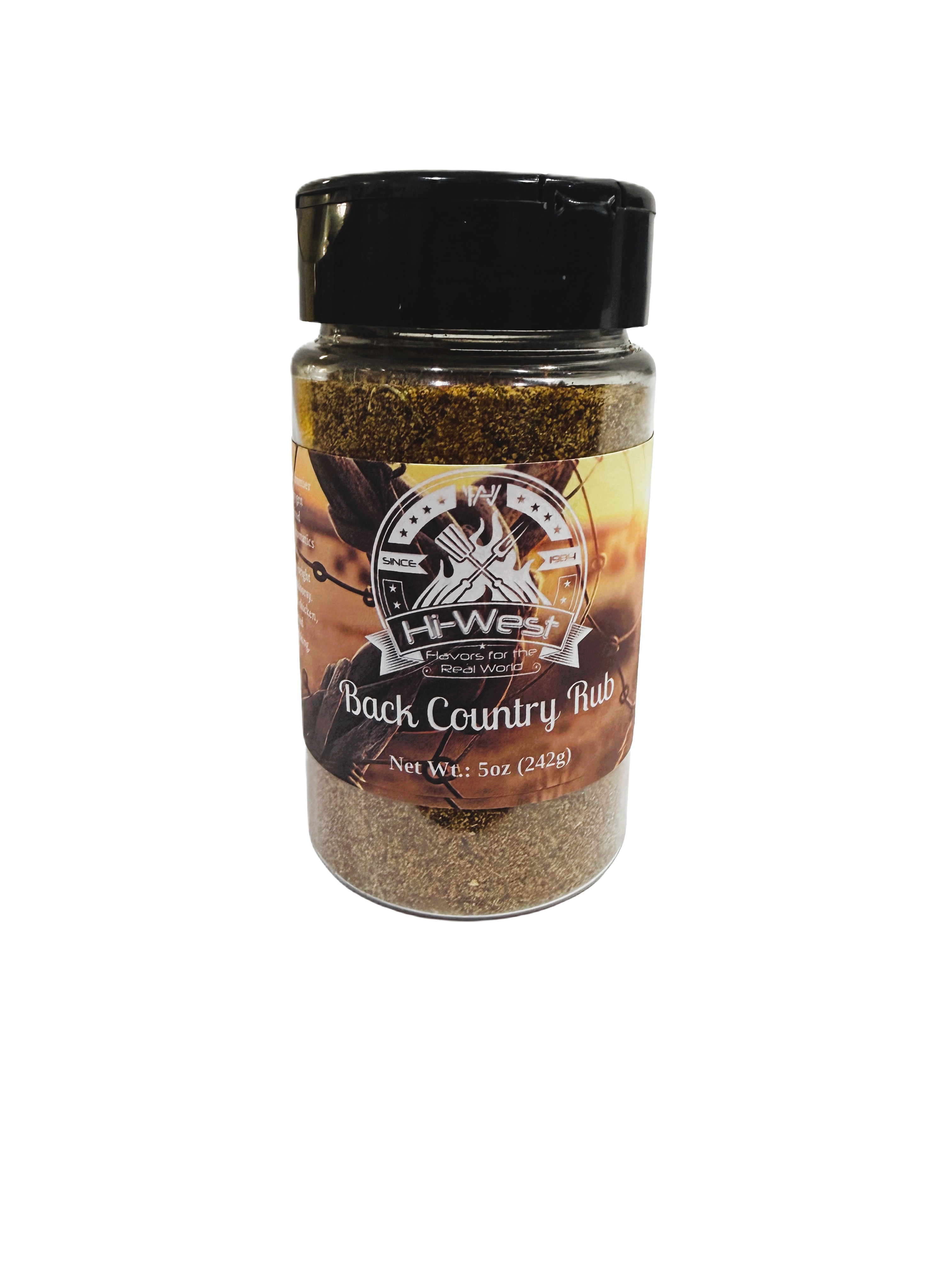
Label everything with the blend name and the date. Rotate older stock to the front so you use it first. If you buy from a wholesale source, you can also ask about larger containers that suit your cooking volume. A bold, all-purpose option like the Hi-West Back Country Rub is a good place to start if you want a blend that stores well in a sealed jar.
If you cook for a crowd or run a food operation, you may need to plan bulk purchases carefully. Learn more about wholesale spice purchasing to find options that match your volume.
Frequently Asked Questions
What is the best way to store bulk spice rubs to keep them fresh?
Keep bulk spice rubs in airtight, food-safe containers in a cool, dark, dry place away from the stove, oven and sunlight. Divide the bulk supply so only a few weeks of blend sits in your everyday jar, and keep the rest sealed in a backup container. Each time you open a container, air and humidity get in, so reseal it right away and use a dry utensil to scoop. Labeling each container with the purchase or fill date makes it easier to rotate stock and use the oldest blend first.
How long do bulk spice rubs stay fresh?
Most dry rubs keep their best flavor for about one to three years when stored properly, though they remain safe to use longer if kept dry. Ground and blended spices lose aroma faster than whole spices, so a rub may taste flat well before it spoils. Check freshness by smelling the blend: a strong, layered aroma means it is still good, while a dusty or faint smell means it is time to replace it. Watch for clumping or moisture, which signal storage problems.
Can you store spice rubs in the refrigerator or freezer?
You can store spice rubs in the freezer if you seal them in airtight containers or vacuum-sealed bags, which protects them from moisture and odors. Refrigeration is less ideal because every time you take a container out, condensation can form and cause clumping. If you freeze a rub, let the container come to room temperature before opening it so moisture does not condense inside. Keep only the backup supply in the freezer and use a small working jar at room temperature for daily cooking.
Are spice rubs better stored in glass or plastic?
Glass jars with tight-fitting lids are the most reliable choice for bulk spice rubs because they do not absorb odors, they are non-reactive, and they block moisture well. Food-safe plastic containers work for large quantities and are lighter and less likely to break, but they can absorb aromas over time and may let in more air if the lid is loose. Whichever material you choose, pick an airtight closure and keep the container dry and out of direct light.


